Home Blog Page 29

Wight Helps People in Need—Day & Night

0

For Doug Wight, his philanthropy begins when people in need walk through his office door or share their thoughts in a sandwich and soup line.

Wight, the owner of Windermere Property Management, manages rental properties for landlords. Potential tenants must provide financial information to lease an apartment. “From time to time, we come across people who need (financial) help,” Wight said. “It may be a veteran who hasn’t found a job, or a family struggling with their kids’ medical expenses. Now and then we draw from company funds to help them through a tough time.”

“Volunteers are from different congregations and work together to help the homeless, despite differences in doctrine or faiths. People are now graduating out of the program, finding jobs, and qualifying to pay rent.”

–Doug Wight. Owner, Windermere Property Management

Doug’s involvement with his church takes this personal mission a step further. Northlake Community Church belongs to the Interfaith Coalition of Whatcom County, a nonprofit comprising 50 churches and other entities that help people deal with homelessness and poverty. Doug and his wife, Lynn, occasionally serve sandwiches and soup as volunteers in downtown Bellingham, which Interfaith does four nights a week. “People come through the line, you chat, and they share with you,” he said.

The Wight’s daughter, Carolyn Roy, is Manager of Housing in Interfaith’s new Family Promise program. It mobilizes hundreds of volunteers to feed and shelter homeless families in unused church halls throughout Whatcom County. Those families sleep overnight in beds and tents inside and then are taken after breakfast to a day-center house in north Bellingham, where they shower and depart for work or school.

These endeavors came together in a perfect storm for Doug Wight: He saw the need through his business and his Interfaith volunteer work. “Family Promise provides a loving, caring environment for these families,” he said. “Volunteers come from different congregations and work together to help the homeless, despite differences in doctrine or faith. It’s an example of the warmth in our human nature and it’s wonderful to see the successes. People are now graduating out of the program, finding jobs, and qualifying to pay rent.”

Laura Harker, Executive Director of Interfaith, pointed to Wight as an example of the business community’s commitment to philanthropy. “He’s a generous auction sponsor, both as a business and as an individual,” Laura said. Furthermore, she added, Windermere Property Management provides off-hours emergency service to tenant families in Interfaith housing. “They provide 10 housing units, at no charge. And if an emergency happens in a unit in the middle of the night or on weekends, the tenant calls Windermere and an employee calls a repair person, which Interfaith pays for. Without this coverage, I don’t know what we would do. We only have a half-time property manager who can’t be on-call 24/7.”

Doug also makes himself available for free advice on landlord-tenant issues, and his company paid its attorney to help Interfaith with the legal work involved in acquiring a house for another of its programs.

“When you’re in this line of work,” Doug said, “you see that the fabric of our community does include folks in need. We identify, now and then, where we can help.”

NEWSMAKERS

0

Brad Haggen Buys Capitol Hill Cafe

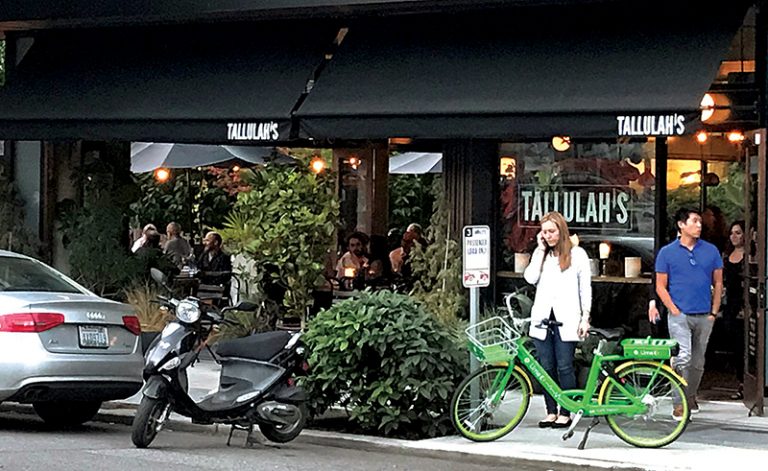
Bellingham restaurateur Brad Haggen has acquired Tallulah’s, a vibrant neighborhood cafe on North Capitol Hill in Seattle.

Tallulah’s features a globally inspired, vegetable-driven menu that has has been widely acclaimed for serving healthy food in a creative setting, which includes a highly popular outdoor patio.

Haggen noted that Tallulah’s is “only five years old and has a very hip vibe with a great staff,” adding that “we have some unique menu items, like a lemon ricotta pancake, a great weekend brunch, and a large dinner following.”

Brad is President/CEO of Naples Best Restaurants Inc., the company he launched after selling his interest in Haggen in 2012, the grocery chain founded by his family. He has more than 30 years of experience in all aspects of the food-service industry. Tallulah’s is at 550 19th Ave. E. in Seattle.


Healthy Pet Employees Receive Free WCC Training

Healthy Pet, Whatcom Community College (WCC) and Impact Washington are collaborating on a program that enables a leading pet-products company to provide its employees free training courses at WCC.

Funding will come through a State Board of Community and Technical Colleges Job Skills Program Grant, which funds customized, short-term, and job-specific training for eligible businesses, using dollar-for-dollar matching grants.

The Job Skills program supports three kinds of projects for a company’s current workforce: new-employee training, retraining, or upgrade training. The Healthy Pet subjects range from a course on the fundamentals of leadership to a series of courses on Lean Program Management implementation.

Customer Experience Supervisor Sandy Bring took classes to learn more about Excel, Outlook, and leadership. She said, “The courses invigorated and energized me to begin thinking about what kind of working environment to create for my team. Ultimately, I want to have a culture that leads to team effort on developing new ideas and strategies that help Healthy Pet maintain ‘Best in Class’ status in our industry, with an emphasis on continuous improvement.”

With more than 120 employees in both Ferndale and Jesup, Georgia, Healthy Pet sees its employees as its greatest resource and is taking intentional steps “to build a team that is composed of passionate, innovative, and committed people,” Bring said.


Whatcom Land Title Donates $6,000 to Local Nonprofit Organizations

Whatcom Land Title donated more than $6,000 to local nonprofit organizations in the first half of 2018, continuing its tradition of giving back to the community.

Among the groups that benefited from the donations are Domestic Violence and Sexual Assault Services of Whatcom County, Habitat for Humanity in Whatcom County, Whatcom Land Trust, Teach One to Lead One, Lydia Place, and Boys & Girls Clubs of Whatcom County.

Whatcom Land Title Owner and CEO Colleen Baldwin said, “We love to support so many deserving organizations that serve people in need and make our communities better.” Her company, which offers title services, including escrow closings, is listed among the top 100 privately owned and operated businesses in Whatcom County. She launched in 1982 and now has branches in Bellingham, Blaine, and Lynden.


Woods Is Growing

Woods Coffee held the grand opening of its newest shop on Saturday, Aug. 11 in Bellevue. The new Woods Coffee Hotel 116 in the heart of downtown is the first coffeehouse in Bellevue with a drive-thru window. The spacious interior features exposed wooden beams, a semi-private meeting space, and a cozy double-sided fireplace on the inside and an oversized patio with ample warm-weather seating outside. Woods has 19 coffeehouse locations, including 15 in Whatcom County.


And the Awards Go To…

Lynden Transport and Lynden International for 2018 Quest for Quality
Lynden Transport’s 22nd award and sixth consecutive No. 1

It’s now six straight first-place finishes for Lynden Transport in the Quest for Quality Awards competition.

The latest honor came on Aug. 7 at the 35th annual Logistics Management Awards show in Anchorage, where Lynden received the highest score among Less-than-Truckload (LTL) western regional carriers—its sixth consecutive No. 1 ranking and 22nd overall award. And Lynden International also achieved strong results in the air-freight category, earning it a 16th Quest for Quality Award.

“We’re incredibly humbled to be ranked at the top for six years in a row,” said Lynden Transport President Paul Grimaldi. “The credit goes to our dedicated drivers, customer-service representatives, and support staff. We intend to keep the momentum going by continuing to provide the Lynden brand of service to our customers.”

Lynden International President John Kaloper said, “The air-freight industry is challenging and competitive and we strive to provide the best one-time performance service and value. Our employees are the key ingredient in our excellent customer service and many years of Quest for Quality Awards.”

For more than three decades, Logistics Management’s Quest for Quality Awards have been recorded as the most important measure of customer satisfaction and performance excellence in the transportation and logistics industry. The results are the culmination of a six-month research project conducted by Peerless Research Group. Thousands of ballots were cast and counted to determine the leaders across a number of critical criteria, including on-time performance, equipment and operations, value, information technology, and customer service.

Lynden Transport and Lynden International are part of a Lynden family of companies, where combined capabilities include truckload and less-than-truckload transportation, scheduled and charter barges, intermodal chemical hauls, scheduled and chartered air freighters and domestic and international forwarding and customs services. P+


PEOPLE ON THE MOVE

The Bellingham Technical College (BTC) Foundation recently elected Michael (Mike) Burke to a three-year term on the Foundation Board, from 2018 to 2021.


Mike is a Senior Vice President for US Bank who has managed a territory as broad as nine states with approximately 450 employees and 60 bank branches. He currently leads a group of 16 community bank branches in the five northwestern counties of Washington. Mike leads the sales and compliance operations for his group, as well as mentoring new territory leaders for the company. He also had the opportunity to expand US Bank’s presence in multiple markets with numerous branch openings.

In addition to the board of BTC’s Foundation, Mike has served on the boards of the Salvation Army, Skagit County Asset Building Coalition and Junior Achievement.

The mission of the BTC Foundation is to change lives by expanding access to quality education for the students of BTC. For more information, go to www.btcfound.org.

Matt Lesinski has returned to Bellingham as Marketing Manager at the Four Points by Sheraton Bellingham Hotel & Conference Center and the adjoining B-Town Kitchen & Raw Bar.

A Western Washington University graduate, he has nine years of marketing and sales experience, including positions at the Mount Baker and The Upfront Theatres. Matt said, “We have an amazing team, a full spectrum of services and I’m thrilled to amplify the efforts for Four Points locally and throughout the Pacific Northwest.”

General Manager John Burns said Lesinski’s “skills and experience will bring people to Bellingham, benefiting the entire community. We’re excited that he has accepted the position as Marketing Manager.”

Four Points, managed by Providence Hospitality Partners, is a brand of Starwood Hotels & Resorts Worldwide, part of Marriott International. 

Signs Plus has recently added a new member to their team, hiring Jeremy Loween as their newest Project Manager. Jeremy was born and raised in Kalispell, Montana and moved to Tacoma in 2008 to attend Pacific Lutheran University. After graduating in 2012, Jeremy moved to Bellingham and worked primarily in banking. He was previously a Loan Officer at Bank of the Pacific here in Bellingham. Jeremy was hired because of his innate ability to build meaningful relationships, which will translate very nicely to the sign industry.

Lisa McGriff has been appointed as a Senior Real Estate Loan Officer at Peoples Bank’s Bellingham Home Loan Center in the Barkley Financial Center.

Lisa brings more than 22 years of experience in the financial-services industry and is passionate about helping customers realize the benefits of home ownership. She believes that “owning a home is an important step toward financial stability and feeling connected with the community.”

A 31-year resident of Whatcom County, McGriff appreciates all the region has to offer and comes from a racing family that enjoys NASCAR sprint-car races, drag racing, and riding motorcycles.

Pam Moser has been hired as the Head of West Coast Operations/Ferndale Plant Manager for Healthy Pet, a leader in the pet-product category.

As plant manager, Moser will be responsible for all production, manufacturing, and maintenance activities. She has a Bachelor’s Degree in Manufacturing Engineering Technology from the University of Nebraska and a Master’s Degree in Business Administration.

Pam began her career as a quality-control technician at a large manufacturing facility while attaining her bachelor’s degree. She now has 30 years of experience in manufacturing management, with a major share of those years as a Plant Manager for Eaton Corporation, a $20 billion manufacturer of electrical and industrial power systems.

Her career began at Eaton and she moved through the ranks to manage a $100 million manufacturing facility with more than 400 operating personnel. She is well-versed in Lean, Six Sigma and Continuous Improvement management concepts and the application of those concepts in attaining operational excellence.

Healthy Pet is a member of the Pet Sustainability Coalition, supporting natural pet products that help to create a more eco-friendly environment and a mutually beneficial relationship between pets and their families. Healthy Pet has leading products in small-animal bedding and cat litter.

Scott Richardson is celebrating his 40th year in the insurance business, representing the Allstate Insurance Company.

Richardson began his career in the basement of the Bellingham Sears store in 1978 and progressed from Senior Account Agent, to office agent and finally to Exclusive Agent/Owner and President of State Street Insurance, with offices at 1901 State St. in Bellingham.

Scott has been heavily involved in the Bellingham community, including serving as past Board member of Lydia Place and past Chairman of the Board of the Bellingham Chamber of Commerce. His State Street Insurance firm was named the Small Business of the Year in 2014 by the Chamber.

He also has been involved with his professional association, the National Association of Insurance and Financial Advisors, including serving as the local President and Regional VP for the Washington State Association. And he spent many years as a speaker for the Washington Insurance Council, giving talks to high school students, driver-education classes and Junior Achievement.

AFTER HOURS

0

Ernst Haeckel (German, 1834-1919); Reef-forming coral with six-fold symmetry, from the book, Art Forms in Nature (Hexacoralla, Kunstformen der Natur), 1904; Lithographic and halftone print. Courtesy of Linda Hall Library of Science, Engineering & Technology, Kansas City, Missouri.

EVENTS

Endangered Species:
Artists on the Front Line of Biodiversity
Whatcom Museum | 8.8.18–1.6.19

The exhibition, Endangered Species: Artists on the Front Line of Biodiversity, presents 80 works of art in all media, from rare books to cutting-edge video, spanning the 19th through 21st centuries. It highlights artists who celebrate biodiversity’s exquisite complexity, interpret natural and human-induced extinctions of plants and animals, and focus on endangered species from diverse ecosystems. The exhibition explores art’s historic role in raising public awareness about the human activities that threaten habitats. Weaving together art, natural science, and conservation.

Endangered Species highlights an international group of 52 artists who celebrate biodiversity’s beauty, interpret natural and human-induced extinctions of plants and animals, and focus on species from diverse ecosystems under stress. It also includes the work of artists who spotlight the human activities that threaten biodiversity alongside projects that revitalize habitats and reconnect people to the rich tapestry of life.

The exhibition spotlights five thematic concepts: Celebrating Biodiversity’s Beauty and Complexity: From Landscapes to Microscopic Imagery; Mammoths and Dinosaurs: Interpreting Natural Extinction; Portraits of Loss: Extinction by Human Actions; Endangered Species: Plants and Animals on the Edge of Survival, and At the Crossroads: Destruction or Preservation of Biodiversity.

Endangered Species has been organized with the intent of impacting public discourse about biodiversity while advancing the artist’s pivotal role in building awareness. By tracing links between contemporary and earlier artists, the exhibition examines art’s contribution to an enduring cultural legacy of nature conservation.

The exhibition will run from September 8 through January 6, 2019 at the Whatcom Museum. For more info visit whatcommuseum.org.


FILM

Far Out, A Film by Teton Gravity Research

SEPT 26 Bellingham, get ready! TGR is returning to the Mount Baker Theatre for the Winter kickoff party of the year. You won’t want to miss this one-night-only premiere of the new feature-length ski and snowboard film, Far Out. There will be prizes from REI, Yeti, Atomic, Volkl, Outdoor Research, and more, plus everyone in attendance will have a shot at the tour grand prizes. Don’t miss your chance to see Far Out on the big screen.

Mount Baker Theatre, 7:30 p.m. Tickets at mountbakertheatre.com.


MUSIC

Mike Allen Quartet

Whatcom Jazz Music Arts Center

SEPT 12 WJMAC welcomes Western Canadian Music Award-winning saxophonist Mike Allen back to the WJMAC stage! He returns with his quartet, featuring the incomparable Miles Black on piano, with eloquent, masterful jazz.

Sylvia Center for the Arts, 7 p.m. wjmac.org.


Arête Quartet featuring NYC guitarist Will Bernard

Whatcom Jazz Music Arts Center

SEPT 19 NYC jazz/funk guitarist, Will Bernard, joins Arête Quartet for this very special performance. Multiple Grammy-nominee Will Bernard has worked with luminaries Don Cherry, Tom Waits, Ben Sidran, Stanton Moore, Dr John, Charlie Hunter, Medeski/Martin/Wood and many others. He brings masterful guitar-playing and several of his compositions to the genre-bending Arête Quartet, teaming with Joe Doria (keyboards), Steve Jones (bass) and Joel Litwin (drums).

Sylvia Center for the Arts, 7 p.m. wjmac.org.


Milica Jovanović

SEPT 29 Pianist Milica Jelača Jovanović is joined by bassoonist Pat Nelson and a classical string quintet for a special performance at the Jansen Art Center. The quintet includes Laura Camacho, violin; Grant Donnellan, violin; Eric Kean, violin; Coral Marchant, cello, and Spencer Hoveskeland, bass. Works by Gardel, Keyper, and Mozart will complement the evening’s centerpiece — Chopin’s Concerto in E Minor, Op. 11.

Jansen Art Center, 7:30 p.m. Tickets at jansenartcenter.org.


RHYTHM & BEAUTY

Whatcom Symphony Orchestra

SEPT 30 The Whatcom Symphony Orchestra opens its 43rd season with the premiere of a new piece by local composer Scott Henderson, titled Cascadiana. Inspired by the majesty of our natural landscape, the piece commemorates the 50th anniversary of the North Cascades National Park, established on Oct. 2, 1968. Repertoire also includes Bruch’s Violin Concerto No. 1 and Beethoven’s Symphony No. 7.

Mount Baker Theatre, 3 p.m. Tickets at mountbakertheatre.com.


Press Play! Video Games with the Symphony

Whatcom Symphony Orchestra

OCT 15 Gain a new understanding of symphonic instruments in technology and life. The Whatcom Symphony Orchestra will be featuring music from popular video games to explore careers in music and technology, while introducing students to the orchestra. Students will learn about the history of music in video games. From Tetris to Angry Birds to Minecraft, we are exploring video game music from past to present. Today’s video-game composers frequently are inspired by and reference great orchestral composers of the past. These composers use cutting-edge technology to create their scores and work with orchestras and graphics designers.

Mount Baker Theatre, 10 a.m. & 12:15 p.m. Tickets at mountbakertheatre.com.


Classical at the Museum

Whatcom Symphony Orchestra

OCT 12 In honor of the Whatcom Museum’s Endangered Species: Artists on the Front Line of Biodiversity exhibition, join members of the Whatcom Symphony Orchestra to celebrate the unique relationship between music and biodiversity, with chamber performances in the Rotunda Room of Old City Hall. Explore how composers choose to express their relationships with diverse bird species through birdsongs, and join in a short trivia game!

Old City Hall, Noon–1 p.m. Free with Museum admission. whatcommuseum.org.


TALK

Jane Goodall:
Tomorrow & Beyond

OCT 8 Jane Goodall, conservationist and world-renowned expert on chimpanzees, is founder of the Jane Goodall Institute and a United Nations Messenger of Peace. Her discovery that chimpanzees make a use of tools rocked the scientific world and redefined the relationship between humans and animals. She travels the world speaking about the threats facing chimpanzees, environmental crises and her reasons for hope. Her talk is part of the Western Washington University Fraser Lecture Series.

Mount Baker Theatre, 7 p.m. Tickets at mountbakertheatre.com.


VISUAL

Boneyard and Bloom: Paintings by Cynthia Camlin

SEPT 6 – NOV 30 Cynthia Camlin’s paintings from 2017 interpret changes in the world’s oceans. The ghostly architecture of bleached coral in Boneyard evokes the withering of life in an acidifying ocean. Bloom is an ongoing series of paintings that revel in the fertility of growing reef systems. These underwater vignettes have been an opportunity for multilayered experiments with paint and process.

Jansen Art Center, jansenartcenter.org.


Whatcom Artist Studio Tour: Showcase Exhibit

SEPT 6 – NOV 30 The Whatcom Artist Studio Tour is celebrating 24 years with an amazing group of 39 artists working in nine different media throughout Whatcom County. This exhibit showcases many artists participating in the 2018 tour. Visit the Jansen Art Center to preview the work of the artists on tour and pick up your Whatcom Artist Studio Tour guidebook. During the Whatcom Artist Studio Tour, artists open their studios to the public. Visitors will meet the artists and get a glimpse into their creative process. Many of the artists will offer tours of their workspaces or demonstrations of the tools and process they use to create their art.

Jansen Art Center, Bellingham, and throughout Whatcom County. Artist information and tour maps at studiotour.net.


Fibers & Beyond Exhibit

SEPT 6 – NOV 30 Colorful, finely crafted, elegant and playful work in fiber media by local and nationally known artists will be exhibited at the Janson Art Center during the Fibers & Beyond exhibit. Featured artists include John Mullarkey, Caryn Friedlander, Patti Barker, Liz Moncrief, Marilyn Olsen and Sheri Ward. The exhibit will also include woven rugs by the late Jo Morgan and work by members of the Whatcom Weavers Guild that showcases tablet and floor loom weaving techniques, eco-dyed monoprints, hand stitching and felting. Don’t miss the annual Fibers & Beyond Conference and Sale, at the J from Oct. 10–13 that includes a keynote speaker, workshops and the popular Whatcom Weavers Guild sale.

Jansen Art Center, jansenartcenter.org.


2018 Fall Juried Exhibit

SEPT 6 – NOV 30 The Juried Exhibits are open to the public as a way to showcase the artistic talent in Whatcom County and the surrounding region. Each season, artists are invited to submit up to five pieces to be judged by a qualified jury made up of artists, curators, and other figures in the arts community. The selected pieces are displayed in the Jansen Art Center for the community to enjoy. There were 195 items from 46 artists submitted to the Fall Juried Exhibit. The jury selected artwork from 35 artists, with 81 pieces being chosen from those submitted. Jansen Art Center, jansenartcenter.org.

Business Pulse Reveals Whatcom County’s Top Private Companies

0

Some staggering increases in gross revenues were the most remarkable trend that leapt off the pages as we compiled this year’s Top 100 Privately Owned Companies in Whatcom County.

Most notable among them: Brim Tractor in Lynden, Dan Brim’s company that has operated for more than 50 years. After adding a complete line of construction equipment, Brim’s six stores that spread from Canada to Oregon increased sales last year by a stunning 160%!

Other shining examples: Tiger Construction with a nearly 85% rise; Emergency Reporting, G.K. Knutson, and Vital Choice at about 50%; Morse Distribution, Kam-Way, and Pro Pack at around 45%; Western Refinery Services 40%, and Hardware Sales at more than 35%.

Altogether, sales totaled in excess of $5.14 billion among the Top 100 leaders, and they account for over 10,100 jobs in Whatcom County and more than 18,000 jobs overall.

Open the digital version below to find out who made the list.


Companies to Watch Pushing Upward on the County’s Top Privately Owned List
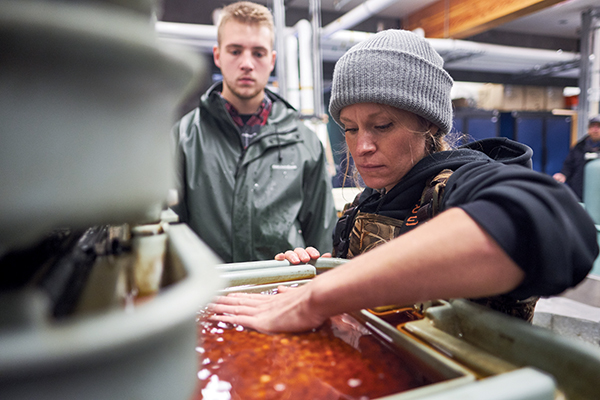

 Glass installation goes far beyond autos at Louis Auto Glass

Although automobile glass glistens in the forefront at this local company, it also could be called “Glass R Us” for its versatility. Louis Auto Glass is fast approaching 90 years in business, and its world of glass has expanded into other applications at locations in Bellingham (where it all began four generations of Adelsteins ago in 1929), Lynden, and Mount Vernon.

While windshields remain the core business, with replacements in every kind of vehicle, the company has developed many other areas of in-house, industry-certified expertise, said President Rick Adelstein (son of owner Mel, grandson of founder Louis, and father of VP Carrie, who steers the anchor store). “For example, in doing windshield replacements, it’s important to correctly install lane-departure and ‘asleep at the wheel’ sensors that are part of the new auto technology,” Rick said, “Otherwise, a dealer or auto repair can’t recalibrate them correctly.”

Other areas of company growth include installation of shower doors and double-pane windows in residential housing, especially apartment complexes. “Seems like we have a shower-door customer about every day,” Rick said. Louis Auto Glass was the Business Pulse Small Business of the Year in 1994, and 17 years later the Bellingham-Whatcom County Chamber of Commerce & Industry named it the Large Business of the Year.

Ari Edelstein, Rick’s son, operates a related business in Bellingham—Final Touch Auto Spa— specializing in detailing, window tinting, paint protection, and—of course—windshield repair from rock damage. A chip off the whole block….

***

Louis Auto Glass is just one of several companies identified in this year’s search for the Top 100 Privately Owned Companies in Whatcom County that came close, falling just outside the list. Some exceeded $5 million, which, until this year, would have qualified for the list—an indication of how strong the economy was for so many businesses last year.

There are numerous other companies that identified themselves in our survey as what we call Companies to Watch, because they are rapidly approaching the $8 million cutoff of this year’s Top 100:

  • Aquatechnex in Bellingham
  • Cascade Connections in Bellingham
  • Chrysalis Inn & Spa in Bellingham
  • Crystal Creek Logistics in Ferndale
  • Fat-Cat Fish in Lynden
  • Len Honcoop Gravel in Lynden
  • Lyndale Glass in Bellingham
  • Lynden Sheet Metal
  • MGM Solutions in Bellingham
  • Onyx Coffee in Bellingham
  • Signs Plus in Bellingham
  • 2020 Solutions in Bellingham
  • Zender’s Truck & Equipment Parts & Service in Bellingham

Back To The Future of Local Salmon

0

Sherri Huleatt
Experts mark 1985 as Whatcom County’s last great fishing season. Stakeholders from business, government, the Lummi Nation, higher education, and more have joined forces to raise the region’s fish population to 1985 levels.

Doug Thomas, President and CEO of Bellingham Cold Storage, chairs the new Whatcom Creek Hatchery Improvement Committee. He brought stakeholders together in 2016 to discuss solutions for increasing fish population in an environmentally sustainable way. After meeting once a month for two years, this group is advocating for a new Whatcom Creek hatchery.

“Why reinvent the wheel? Let’s take the best-in-class practices from Alaska and try them here in Whatcom Creek. Everyone seems in favor of it.

We’re all trying to bring back the fish population.”

—Doug Thomas, Chair, Whatcom Creek Hatchery Improvement Committee

It would serve as a state pilot project, patterned after the Douglas Island Pink and Chum (DIPAC) hatchery in Juneau, Alaska—one of the most successful hatcheries in the world. “Why reinvent the wheel?” Thomas said. “Let’s take the best-in-class practices from Alaska and try them here in Whatcom Creek. Everyone seems in favor of it. We’re all trying to bring back the fish population.”

That achievement would have a major trickle-down effect on the local economy, impacting commercial fisheries, sport fishermen, packaging and storage companies, whale-watching tours, boating repair and storage, and more. Thomas said that the Washington Dept. of Fish & Wildlife, local governments, and the Lummi Nation support the project.

Owner Mark Riedesel at Barlean’s Fishery said, “We’ve seen our working waterfront shrink bit-by-bit every year. A new hatchery releasing up to 17 million salmon smolts yearly would create a true bright spot in our fishing-related community.” Riedesel serves as president of Bellingham Puget Sound Anglers, sits on the Hatchery Committee, and is an advisor to the Washington Department of Fish and Wildlife’s Puget Sound Recreational Fisheries Enhancement Committee. “A hatchery of this magnitude,” he said, “has the potential to create more jobs within the commercial sector of the fishing industry and to benefit the recreational business. It’s a true win for all user groups.”

The new hatchery could be a major boon for tourism, too. Hatchery committee member Sandy Ward, President and CEO of Bellingham Whatcom County Tourism, said the hatchery could provide a great educational opportunity about the life cycle of salmon. “Couple this with the chance to enjoy fresh seafood at some of the best farm-to-table restaurants in the Pacific Northwest,” Ward said, “and we have the recipe that will get visitors to spend an extra day or night in Bellingham and Whatcom County and generate additional visitor spending.”

Hatchery Committee member Brittany Palm-Flawd, BTC’s Hatchery Manager and an instructor, said the hatchery could provide a new hands-on training facility for students, and employment opportunities for graduate students.

The hatchery plan is in line with Governor Jay Inslee’s initiative to restore Washington’s dwindling orca population, since salmon are orcas’ primary food source. “By assisting in efforts to save the whales, hatchery jobs also help the tourism and conservation sectors,” Palm-Flawd said.

A cost-recovery program would fund the hatchery’s ongoing operations by requiring fishermen to pay a percentage of their catch’s value and thereby decrease government spending on the project.

The next step in the process: obtain financing to conduct a feasibility study. Once the hatchery is built (still several years out), Thomas said, it will take several years to see results as stronger fish populations slowly increase. “But even a small increase would make a huge impact,” he said.

If 10 million fish were released into the water with a 1.5% survival rate, then just 150,000 would return. If survival increased to Alaska levels (about 3%), that would double the fish population. While the increase might sound small, it could make a huge difference to the local economy.

“This much-needed hatchery can make a difference and point us in a positive direction,” Riedesel said. “Whales, commercial fishermen, recreational fishermen, business owners, and many others will benefit.”


Proposed Salmon Hatchery: Local leaders Weigh In on Value of Econ Impact

Three members of the newly-formed Whatcom Creek Hatchery Improvement Committee from different industry perspectives responded to this question from Business Pulse:

“How much would a proposed Whatcom Creek salmon hatchery impact the local economy?”

Business: “From a business perspective, a new hatchery would create an opportunity for more salmon to be available both commercially and for the recreational community to harvest. This type of hatchery would also help alleviate impacts on local salmon stocks of concern. What those positives equate to from the business side of things, is it would allow for more local fish to be harvested and purchased, at a reasonable price, and we can then pass those savings on to all of our customers. What’s really important to remember is that this can all be done while being respectful of wild stocks of concern.”

—Mark Riedesel, Owner, Barlean’s Fishery; President, Bellingham Puget Sound Anglers, and Advisor for the Washington Department of Fish and Wildlife’s Puget Sound Recreational Fisheries Enhancement Committee

Tourism: “We know that visitors from around the world are looking for experiences that are unique and authentic. Having the hatchery open to visitors and locals alike would provide an opportunity for Bellingham and Whatcom County to showcase our sense of community, natural resources, history (including the Lummi Nation and Nooksack Tribe), and how critical protecting the future of our fisheries has become.”

—Sandy Ward, President and CEO, Bellingham Whatcom County Tourism

Higher Education: “There definitely are positive impacts for the program and its students. As a technical program that focuses on hands-on training, this provides another educational resource for the students (on-site training, internship opportunities, access to different operational systems, etc.) and local employment opportunities for our graduates… By increasing the number of hatcheries, you not only provide hatchery jobs (direct) but also associated jobs (indirect).”

—Brittany Palm-Flawd, Bellingham Technical College Hatchery Manager & Instructor

Birch Golf Classic Tees Up Community Caring

0

Clockwise from top left: Team Birch Equipment (with Jake Locker, far left); Some of Carole Garguile’s team of volunteers with Sarah Rothenbuhler, far left; 2017 winning team Dunkin & Bush; Team/sponsor Mills Electric (with Ryan Stiles, 2nd from right).

By Dave Brumbaugh

When does writing a check with a few zeroes at the end make you smile? Perhaps when it:

  • Goes to truly deserving nonprofits that make a difference with people facing heart-breaking challenges.
  • Gives you the opportunity to golf at one of Northwest Washington’s top courses.
  • Connects you with an amazing array of local people in business, education, entertainment, law enforcement, and sports.

That’s the recipe for the Birch Golf Classic set for Sept. 6 at the Bellingham Golf & Country Club. For the last three years Birch Equipment in Bellingham has orchestrated the Birch Pro-Am, teaming up with local businesses to raise more than $750,000 for Whatcom Hospice.

The event has a new twist this year. Birch CEO/Owner Sarah Rothenbuhler restructured the format, working in concert with former NFL quarterback Jake Locker, Paul Twedt with Northwestern Mutual, and Jessie Evenson, who is Birch Equipment’s Director of Employee and Customer Programs. They transitioned from the previous pro-amateur format to a “community-amateur” event.

Instead of teams pairing only with a pro golfer (several still will participate), the teams will select a “celebrity” from the local region. Some have marquee names—like Locker and former NFL kicker Michael Koenen, and internationally-known comedian Ryan Stiles (Uptown Theater owner and star of “Who’s Line Is It Anyway?”)—and others include entrepreneurs, politicians, and executives from the area.

“We’re all so busy with life and work, and the tournament will provide a great day for meeting and connecting incredible people whose paths don’t always cross, but they should,” Rothenbuhler said. “You really get to know people when you spend a day golfing and having an early dinner together.

“True admiration and friendships have developed with people, businesses, and services we only have had time to read about. So this year a spin on the pro-am platform will shine a light on 30 people doing amazing community work through their careers and community involvement.”

The teams will select what’s called a “Duo”—their 5th player from the community list, plus an enticing prize package put together by a variety of sponsors (e.g., entertainment packages like a Rod Stewart concert, Seattle pro sports events, wine and dining experiences, golf clubs, etc.).

“A lot of time and energy is going into this,” Locker said, “because we believe in people truly coming together for their community. Not just for the prize benefits, but because they actually care about people. That’s what’s been happening with this tourney, and we’re now bringing it to another level.”

Beneficiaries this year: Northwest Youth Services (NWYS) and Engedi Refuge.

Northwest Youth Services impacts more than 1,000 youths every year in Whatcom and Skagit Counties, providing a safe home for more than 200 young people between ages 13-24 who have run away, been displaced, or experience homelessness due to trauma, neglect, abuse, or exploitation.

Engedi Refuge is a restorative program for women who have survived sex trafficking and prostitution. The refuge provides relief from poverty, addictions, abuse, and complex trauma often associated with sex trafficking.

“The Northwest is in a homeless epidemic, and our I-5 corridor is one of the busiest sex-trafficking areas in North America,” Rothenbuhler said. “This tournament connects community businesses who want to shine a light of awareness and financial support on services that make a difference in transitioning our kids and those trapped in human trafficking to a network of better options.”

At press time the Birch Golf Classic lineup had not filled out completely. For updated information on players, prizes, and getting involved, visit BirchGolfClassic.com or check its Facebook page.  


ANNUAL BIRCH GOLF CLASSIC LINEUP FILLS OUT WITH ‘DUOS’

Team entries in the Birch Golf Classic 2018 have selected a “Duo”—a 5th player on the team selected from a list of prominent community members (rather than a traditional choice of a professional golfer), plus a prize package. The tournament takes place Sept. 5 at the Bellingham Golf & Country Club.

Following is the list of 5th players and the prize package that completes the Duo for participating four-person teams:

  • Carmen Dolfo, Women’s Basketball Coach & Administrator WWU + Private Wine Cellar Dinner at Lighthouse Bar & Grill for 8
  • Chelsea Long, Vice President, Acme Lift + All Inclusive Sounders Suite Tix w/ Pre-Match Field Access for 5
  • Chris Jorgensen, Director, Aerotech Golf + Miura Wedges w/ Aerotech Shafts
  • Craig Welty, PGA Pro, Skagit Golf & Country Club + All Inclusive Mariners Diamond Club for 4
  • Dale Zender, VP of Operations, CAO, CFO, PeaceHealth NW + Sold-Out Leonetti Merlot & Cabernet Wine
  • Senator Doug Ericksen + Private Tour of 22 North with Happy Hour for 10
  • Doug Thomas, President & CEO, Bellingham Cold Storage + 12 Seat Mariners Package
  • Jake Locker, Co-Owner, The Locker Room, Former NFL Quarterback + $2,500 Shopping Spree at Birch toward Rental / Retail
  • Janelle Bruland, President & CEO, MSNW + All Inclusive Seahawks Sideline Tix for 4
  • Whatcom County Sheriff’s Deputy Jason Nyhus + The Locker Room Fitness Club Annual Membership & Swag for 4
  • Jeff Tetrick, Career & Technical Education Director, Bellingham Public Schools + Dinner Tab at Dirty Dan Harris Steakhouse for 8
  • John Blair, General Manager, Dunham Cellars + All Inclusive Sounders Suite for 8
  • Michael Koenen, Co-Owner, The Locker Room, Former NFL Punter + Guided Private Waterfowl Hunting Excursion for 4
  • Mike Montgomery, PGA Pro, Sahalee Country Club + Front Row Rod Stewart Seats (Oct.) for 4
  • Ryan Stiles, Upfront Theater Owner, Actor, Comedian, Producer + Upfront Theater Package
  • Steve Card, Director of Athletics, WWU + Sold-Out Leonetti Merlot & Cabernet Wine
  • Steve Lawrence, MHS Teacher & President, Meridian Education Association + Private Cicchitti’s Pizza Truck for 50 people
  • Tony Larson, President, Whatcom Business Alliance + 4 Jeroboam (3 Liter) Dunham Cellars Cabernet Sauvignon
  • Wes Herman, Owner, Woods Coffee + Exclusive Woods Coffee Product Package & Tour

For more information about the tournament, go to BirchGolfClassic.com for a full slate of sponsoring teams and a summary of the nonprofit organizations benefiting from the event (NW Youth Services and Engedi Refuge).

Locals Fish Alaska but Bring the Bounty Home


Did you know that Whatcom County has a thriving commercial-fishing industry? Many people don’t. The Port of Bellingham estimates that commercial fishing and processing companies in Whatcom County employ more than 2,700 on Port premises. The maritime industry in general employs more than 6,000 Whatcom County residents.

And did you know that many of the county-resident fishermen spend a good portion of their fishing efforts in Alaskan waters?  They also bring 10s of millions of dollars in income back to the county with them.

Many of the bigger boats in Squalicum and Blaine harbors travel to Southeast Alaska each spring to fish for pink and other salmon species. These are the 58-foot-long purse seiners. Alaskan law prohibits salmon seiners from being any longer than 58 feet. And Bristol Bay gillnetters can be no longer than 32 feet.

Smaller vessels, such as gillnetters and trollers, go to Southeast Alaska as well. Some boats travel as far as the southwest tip of the Alaska Peninsula. Other Alaska locales include Kodiak, Cordova and Prince William Sound, and Cook Inlet.

Bellingham and Blaine also have a fleet of tenders that travels to all these areas each season. These are larger vessels that take the fresh catch from the fishermen and deliver it to the seafood plants for processing.

Besides salmon, county fishermen target halibut, sablefish (black cod), roe herring, Dungeness crab, and Pacific cod.

Whatcom County also is home to many boat owners, skippers, and crewmembers who fish in the fabled Bristol Bay sockeye fishery. Their 32-foot gillnet boats stay the winter in boat yards around the Bay. Crews fly up in early June for two months of intensive fishing; the 2018 sockeye run is predicted to be a near-record 50 million fish!

Anecdote: Resident Alaskans view fishermen from the “Lower 48” with some disdain. But they have come to accept their out-of-state cousins in the sometimes intense competition for fish!

Anecdote: Did you know that in Alaska, many fishermen refer to sockeye as “reds,” and chum salmon as “dogs,” and pink salmon as “humpies” and coho salmon as “silvers,” and chinook salmon as “kings”?

On any given day in the Summer in Whatcom County, you’ll see seafood products that were caught in Alaska, and chances are it was caught by local fishermen. For example, fresh Copper River sockeye are first in the marketplace in mid-May. By late June, they’ve been supplanted by sockeye from Kodiak and Southeast Alaska. July features fresh Bristol Bay sockeye. Trolled silvers will appear shortly after sockeye as well as Southeast Alaska pinks and chums in August. Winter months will feature these species that were flash-frozen. From mid-November to mid-March, fresh halibut from Southeast Alaska is available.

There are a number of salmon fishermen living in the county who sell their catch directly to local consumers. Entrepreneurs, such as Desire Fish, Fall Line Fisheries, Sea to Shore Seafood, and Nerka Sea-Frozen Salmon offer high-quality frozen salmon in the Fall, Winter and Spring.

A majority of the Alaska catches gets returned to processors in Whatcom County, including
American-Canadian Fisheries, Bornstein Seafoods, Dana Besecker Co., Homeport Seafoods, Icy Strait Seafoods, Q Sea Specialty Services, Seafood Producers Cooperative, Sound Pacific Seafood, Trans-Ocean Products, Trident Seafoods, and Vital Choice Seafoods. Much of the product goes through the Bellingham Cold Storage complex—the largest portside cold storage on the West Coast, handling millions of pounds of Alaska product..

Alaskan waters draw the fisheries and fill the boats, but the hauls return to fill the Whatcom County tills.

Pete Granger retired from 45 years of working in the maritime and commercial fishing industry (and remains an active reef-net -fishing operator off of Lummi Island). Pete also serves as president of the Whatcom County Working Waterfront Coalition.


FISHING IN ALASKA BRINGS 10s OF MILLIONS IN REVENUES TO WHATCOM

The migration of Whatcom County-based fishing vessels by the hundreds to Alaska account for an enormous economic boost back home at the Ports of Bellingham and Blaine.

They create hundreds of jobs and then bring back 10s of millions of dollars in gross product that translates to hefty incomes for families and crews of the wide variety of fisheries.

Fishing boats of all sizes (within limitations of Alaska law), worked by men and women, and often employing high school and college youths for rigorous summer work, travel far and wide around the state of Alaska’s waters.

Some boats travel as far as the southwest tip of the Alaska Peninsula. Other Alaska locales include:

The Arctic and Yukon Region in the northwest;

Down around through Bristol Bay, Kodiak, and Cordova (seat of the famous Copper River) in the Westward Region;

And, the Southeastern Region moving toward the coast west of Juneau.

These waters have a reputation as the some of the most pristine and best-managed fishing areas in the world. This map shows the breadth of the managed areas for commercially fished salmon:

Commercial Salmon Management Areas


Lots of Whee! In Ski to Sea

0

A curious spectator’s guide

By Mike McKenzie

Time to head out to watch Ski to Sea, coming right up—May 27, just like every Sunday of the Memorial Day Weekend over the last 45 years. But, with seven relay events and hundreds of participants, what and where is best to watch? The prevailing thought is—so many choices, so little parking.

Let’s begin where it ends, lured by one little descriptor on the event website in the Kayak section: “It is great fun to watch a kayaker hop out of his kayak and try to run up the hill to the finish after his legs have fallen asleep.”

Seriously, try start-to-finish: “Zuanich Park at Squalicum Harbor for the start of around 500 colorful kayaks.” Or, Boulevard Park as they float past (as their legs fall asleep). And/or, Marine Park for the grand finish of the whole kit-and-kaboodle. And if you’re on the water yourself to watch, you could create a wake, bad for a kayak, so stay back.

Speaking of colorful, check out the CycloCross Bike action at one of the easiest venues for watching any of the seven legs, Hovander Park in Ferndale, with lots of parking.

Another strange notation by event organizers says of the Canoe race, “One of the most hazardous parts of the river is the whirlpool near the north end of Noon Road.” Who doesn’t love a good whirlpool hazard. Otherwise, good vantage points for watching canoes: the river crossings on Hannegan and on Guide Meridian, Ferndale parks overlooking the river, and the exchange area in Hovander Park.

And there’s yet another little, devilish tease: “The (canoe) finish is fun because the exhausted canoeists must carry their canoe across the finish line before they hand the (relay) chip to the mountain biker.”

Obviously, there’s much more. For additional details on observing one or multiple facets of Ski to Sea, go to that voluminous, aforementioned website, skitosea.com.


OK, with those preliminary guidelines in place, I’m up, awake, and ready. Time to go watch people race all day. Remember, this massive, wide-ranging community fixture is billed as the “original adventure race”—and it gives rise to a plethora of spectating speculations. Especially since I’ve never gone before.

Where, oh where do I go to watch? Mt. Baker Ski Area. Highways. Bridges. Parks. Start. Finish.

And what am I watching? Skiers, snowboarders, runners, cyclists, and here come the kayaks, or canoes…no, they’re kayaks. Oh, my—what’s the difference? Just kidding. But, look, if I’m really not sure, I can think in grammatical terms of the number of competitors in the boat: singular, kayak; plural, canoe.

And that whole thing about the kayakers’ legs falling asleep, I’m thinking, “Yay!—rubber-legged kayakers wobbling up to the finish line. But, hey, it beats watching film of a torture chamber. Maybe.

(By the way, I have those easy-breezy sit-on-top kayaks, and every time the term “kayak” comes to my mind, so does certain music. Billy Joel, as in, if you’re watching kayaks or canoes from your own boat, stay back-ack-ack. And I think of the Coasters, “Yakkety-yak, don’t talk back….” It’s a curse.)

At the CycloCross Bike action, stand back and watch out for the scramble of the mélange of bicycles pumping out of there like bats outta Hey!—look at the colors on that little wheel-a-monster!

Regarding that vaguely-veiled (appealing?) notation by event organizers about the Canoe race, whee! I wouldn’t. want to miss the whirlpool hazard.

OK, time to get serious again. Here are some more helpful reminders and tips, however whimsical, for putting more “whee!” into the Ski to Sea:

  • The most important precautionary thought for the day–safety, safety, and safety. In that order of importance, first, second, and third—right up through 7th and final leg.
  • That’s precaution for competitors. For you as a spectator, No. 1 precaution: Parking is sparse on the course. Some roads close. Parking on road and street shoulders and bike lanes, no, as in NO.
  • Some popular spots: Up on Mt. Baker to see anything on snow—cross country and downhill skiing, snowboarding—knowing that you’re trapped up there for four or more hours. Must arrive before 7:15, and roads will reopen about 11ish. Parking, tight.
  • Ditto, the Downhill Run. Starting point of the hand-offs is good. Lots of turnoffs for watching, but not lots of parking. And, roads closed, so you’re pinned in until the last runner goes through.
  • Other popular spots: Parks. Hovander Park, Squalicum Creek Park, near Zuanich Point Park, Boulevard Park. And the biggie—the crowd-infested Finish Line in Historic Downtown Fairhaven at the foot of Harris Avenue. (Where there are goodies to eat and drink.)
  • Most hazardous points: Tightly-controlled Mt. Baker Highway. Roads along on the Road Bike leg (good watching spots in Glacier, Kendall, Nooksack, and the exchange area at Riverside Park in Everson, but not in between). Narrow Marine Drive.
  • And an option for additional fun-for-the-day: Mark your calendar for Saturday, May 19 and go see the Junior Ski to Sea. No skiing, no boats, but scads of kids between Grades 3-8 with bikes, hula hoops, soccer balls, a race to run, and an obstacle course to maneuver.

Best part of it: Everything’s in one place—Zuanich Point Park. And there’s parking.

All in all, I’m ready to go. And in considering options from all I’ve gleaned from the website, news clippings, and advertising, I’m thinking in terms of where and what to watch, me and Billy-J, well, “You oughtta know by now….”


Why the Cattlemen and the Farm Bureau are Suing the County

Ben Elenbaas
Second Vice President, Whatcom County Farm Bureau
Vice President, Whatcom County Cattlemen’s Association

I submitted a research paper in May of 2014 to finish my degree at Western Washington University. It was titled, “Is Planning and Zoning Helping or Hurting Whatcom County’s Pursuit of Preserving 100,000 Acres of Farm Land?” by Farmer Ben. The points in it remain relevant today (see dissertation in it’s entirety below).

Four years later, two groups I serve as a second vice president and vice president, respectively—the Whatcom County Farm Bureau and the Whatcom County Cattlemen’s Association—have filed a lawsuit against Whatcom County in response to the recent Critical Areas Ordinance (CAO) update.

The Farm Bureau has taken the position that the CAO, as passed by the Whatcom County Council, is not compliant with the state’s Growth Management Act (GMA). We feel strongly that their version of the CAO is detrimental to the future of food and fiber production in Whatcom County, threatening the agricultural industry to the point of destroying our vital ag economy.

Farm land is just farm land without farmers. And, the high cost of regulations could cause many farmers to go out of business. The general purpose of protecting resource lands is to benefit all the citizens of the county.

Farmers historically have been the best stewards of Whatcom County’s agricultural lands for more than 100 years. I’m a fourth-generation farmer here, for example. We farmers have proven a desire to continue to care for the land in a way that’s mutually beneficial to both soil and water health, as well as to preserve habitat and allow wildlife to flourish.

We’re not like a Third World country. We’re lucky we actually are in a position to care about the environment, and we do. Protecting the environment is somewhat of a luxury; environmental compliance is not something Third World countries do. They worry about surviving first, then they manage their resources. In countries that aren’t producing enough food, they’re not worried about where their runoff’s going. They’re worried about surviving.

A vibrant ag economy is essential to keeping environmental stewardship in the forefront of everyone’s mind. The bottom line is, the bills need to be paid or we won’t have farmers left to manage the agricultural resource lands that the GMA seeks to protect. Some say that is exactly the outcome some of the environmental activist groups seek, and they seem to be using county government, county ordinances, and manipulation of state law to implement their goals.

Whatcom County Farm Bureau believes, beyond a shadow of a doubt, that the best way to achieve environmental health in the ag lands is to foster a vibrant, healthy agricultural economy. My personal feeling (not the Farm Bureau’s), as a producer of registered black Angus livestock in the Nooksack Valley south of Lynden, is that many of the people who write planning and zoning regulations, including writers of the CAO, would rather not have any hooved animals in Whatcom County.

Frankly, a lot of local government regulations just make you scratch your head and wonder. Regulations place the burden on the farmers to prove that they’re not hurting water quality. Instead, farmers should be able to implement best management practices as they see fit, practices that have kept Whatcom counties farmlands productive and healthy for well over 100 years, without local government telling us how to do it—until they can prove we’re causing harm to the land and water. A bureaucrat is not the best person to tell us how to farm our land.

We certainly don’t want to protect anyone who’s doing things wrong. But a common belief among county farmers is that the new CAO will both harm our ability to farm and do nothing additional to protect Critical Areas. Farm Bureau believes that challenging the CAO, as passed, is the best way for Whatcom County farmers to continue to steward and maintain our valuable resource lands and the Critical Areas within them.

The farm community has not been as well represented on these issues as the environmental-activist community. That’s why the Farm Bureau allocated resources, hired a lawyer, and has made sure that more farmers attend public meetings to speak to best practices.

We in the ag community have presented workable solutions. Recent studies have shown that the finger may have been pointed unfairly at just the farmers. Wherever we need responsibility taken, the ag community has proven that we are more than willing to step up to the plate. Additional restrictions do nothing but threaten the ag economy.

Over-regulation hurts big producers, but virtually destroys the small producer. There’s no good reason to put more regulations on us while there’s continued improvement in our best practices. We’re providing benefits to water quality, shellfish, salmon, etc.,—and science shows it’s working. The science doesn’t point to a need to increase regulations and take away property rights from people that in some cases have been caring for their land since it was cleared and converted to farmland. We’re doing a fine job as it is.

The goal of the Farm Bureau, the Cattlemen’s Association, and other supportive ag groups is to find workable solutions for the good of everybody at the table—rather than have to rely on the lawsuit for relief. The County wants to hear more from us, and we’re working with its staff and lawyers toward workable solutions and an agreement. Talks have been friendly and productive recently. It’s just disappointing that the Ag community was forced to go to this legal extreme to have an equal voice with local government. 


Here’s the content of my dissertation in 2014:

Is Planning and Zoning Helping or Hurting Whatcom County’s
Pursuit
of Preserving 100,000 Acres of Farm Land?

By “Farmer Ben” Elenbaas

ENVS 306, Professor Mayer, May 30, 2014

The other day while on a break from driving my tractor, I was reading an issue of Acres USA, The Voice of Eco-Agriculture. It is a national monthly publication that focuses on, as the name implies, agricultural issues specific to natural/organic/ecologically friendly farmers. I was particularly drawn in by the opinion article in the front of the magazine written by Martin Harris, a freelance writer and Dairy replacement heifer farmer. The piece was titled, “Planning and Zoning Fails to Embrace Mini-Ag.”   Harris noted the extraordinary growth in the mini- farm ag sector referring to it as “new agriculture,” he described it as, “typically small acreage, niche-market, organic in sense” and boldly states that one would expect, “the planning and zoning fraternities and bureaucracies to be tweaking their land-use design standards and enabling regulations,” (Harris, 4) that enhance the viability of “new agriculture”, but in some states the opposite seems to be happening. “It would be no exaggeration to observe that the entire “Smart Growth” movement…seems to reject the mini-farm pattern almost entirely.” (Harris, 4) He goes on to give examples of how planning and zoning regulations such as minimum lot size, prohibition of non-government inspected food sources, and maximizing property tax revenue have an immediate effect on the viability of agriculture in a given area. (Harris, 4) As a fifth generation Whatcom County farmer and current member of the Whatcom County Planning Commission, naturally this article stirred up some questions in my mind. It is well documented that Whatcom County is intent on preserving 100,000 acres of land to sustain a viable agriculture economy. This goal is being carried out through public policies such as minimum lot sizes, Transfer of Development Rights, the Critical Areas Ordinance and other land use regulations in the Agricultural zone of Whatcom County. This article made me ponder the question, is Whatcom County’s planning and zoning helping or hurting its pursuit of preserving 100,000 acres of farm land?

Title 16.16 of the Whatcom County Code is called the Critical Areas Ordinance. The purpose of the CAO is to “Protect wetlands, floodplains, critical aquifer recharge areas, and habitat conservation areas by applying the Best Available Science to ensure no net loss of ecological functions and values. Protect species listed as threatened or endangered and their habitats.” The county has adopted the CAO under the authority of RCW 36.70 and 36.70A, otherwise known as the Growth Management Act. (WCC, 16.16) A visit to the county’s website gives even more background information:

“In response to concerns regarding rapid growth occurring in the State of Washington, the Washington State Legislature passed the Growth Management Act (RCW 36.70A) in 1990. The Growth Management Act (GMA) required counties and cities to adopt comprehensive land use plans and development regulations to coordinate and manage growth and development, as well as protect the State’s natural resources and critical areas. After several years of development, study and public input, the Whatcom County Council adopted the Whatcom County Comprehensive Plan in May 1997 and the Whatcom County Critical Areas Ordinance (CAO), WCC Chapter 16.16, in October 1997. Under the provisions of the GMA, local jurisdictions must designate and manage regulated critical areas. Development activities within, or adjacent to, these critical areas, are required to comply with the provisions of local critical areas ordinances.

The Whatcom County PDS Department is the primary agency responsible for implementing the Whatcom County Critical Areas Ordinance. The provisions of the CAO apply to any land use or development within an area that meets the definitions and criteria for critical areas as established in the ordinance.” (www.co.whatcom.wa.us)

It is important to note that the Whatcom County Critical Areas Ordinance is specific to Whatcom County, even though it is a mandate of the State. Different municipalities throughout the state comply with state law in different ways. The point of the GMA is to make land use decisions on a local level. So what does all this mean to Whatcom County farmers? Nothing, as long as your farm does not fall into a critical area. Remember a critical area is either a critical aquifer recharge area, a wetland, a geologically hazardous area, a frequently flooded area, or a Fish and wildlife habitat conservation area, which includes all fish bearing streams. (WCC, 16.16.800) It is safe to assume based on this definition and looking at the CAO maps supplied by Whatcom County PDS staff almost every parcel in Whatcom County’s Ag zone could be classified as having a critical area on or around it which would then subject it to the provisions of title 16.16. The CAO does not disallow farming practices, “ongoing agriculture activities shall be permitted within critical areas and/or their buffers in accordance with the standards of this chapter or pursuant to an approved conservation program established by this section. This program shall be subject to continued monitoring and adaptive management to ensure that it meets the purpose and intent of this chapter,” (WCC, 16.16.290) As long as a farmer is willing to adhere to a strict farm plan which severely limits the farms ability to make land use decision that help protect the farms ability to remain an agricultural endeavor. “Farm conservation plans shall be subject to county review, approval, monitoring, adaptive management, and enforcement…the technical administrator shall review and approve the farm conservation plan… The technical administrator and/or the farm operator shall monitor plan implementation and compliance… Agricultural operations shall cease to be in compliance with this section when the technical administrator determines that any of the following has occurred…” (WCC, 16.16 Appendix A) a list too numerous to list. The penalty for non-compliance can be stiff. “Any person who violates any of the provisions of this chapter shall be guilty of a civil offense and may be fined a sum not to exceed $1,000 for each offense. After a notice of violation has been given, each day of site work in conjunction with the notice of violation shall constitute a separate offense.”( WCC, 16.16.285)

I know a Whatcom County farmer whose property is adjacent to a fish bearing stream, as is the case with most Whatcom County farms. The farm comprised roughly 100 acres. The farmer was properly notified by the county that he either needed to remove his 10 cows from his land, which was zoned Ag, or face a $1,000 a day fine per animal, citing the critical areas ordinance. So the farmer was faced with a choice, $10,000 a day fine, implement a farm conservation plan, or quite farming. At first, the operator chose to implement a farm plan. The technical administrator laid out the conservation plan for the farmer over the coming weeks and when the plan was finished and all the required setbacks per WCC 16.16 where implemented the farmer was left with 13 acres of land that was not “protected.” The setback for a fish bearing stream as prescribed in section 16.16.740 is 100 feet and up to 150 feet if the stream is a shoreline stream as was the case in this instance. The setbacks for wetlands can be up to 300 feet. The farmer was forced to sell his cows instead of enduring the economic hardship of accepting a farm plan that did nothing but destroy his farm. One of the goals of the CAO is to, “Protect property rights, while allowing for economic development including agriculture.” (WCC, 16.16) It is assumed that this is where the best available science plays a vital role. However a quick google search illustrates that best available science for neighboring counties and other states throughout the western United States is highly variable as evidenced by the differing mandates in regards to critical area buffers. A recent study by Washington State University acknowledges, “Riparian buffers are widely considered to be a good land stewardship practice because of their ability to reduce agriculture-related non-point pollution.” It continues, “The performance and effectiveness of buffers is highly variable and site specific.” (Kallestad) This could account for the variability in CAO ordinances throughout the west. When faced with choosing Whatcom County as the location of a viable farming operation, no doubt WCC 16.16 Critical Areas Ordinance will play a role in that decision making process. This is particularly true for farming operations that are dependent on livestock production, like the dairy industry.

According to a 2013 study by Washington State University School of Economic Sciences, “the combined total economic contribution of Washington States dairy industry is about $5.201 Billion.” (Neibergs, 14) This is clearly a staggering number and worthy of mention when addressing significant contributors to Washington State’s economy. In fact, Washington has long been a national leader in milk production ranking number 11 in the nation in cow numbers and has historically been ranked either number one or number 2 in the nation in milk production per cow. With a 2011 average of 23,727 lbs. of milk production ranking Washington number one according to the USDA. (Neibergs, 1) Clearly this indicates our states suitability for the dairy industry. Happy cows do not come from California. Happy cows come from Washington State.

The same economic survey as mentioned above sights, “Whatcom County is the leading West side dairy county and has twenty percent of the States dairy production.” (Neibergs, 4) One could reason then, that if 20 percent of the State’s dairy cattle reside in Whatcom County, then 20 percent of 5 billion dollars would mean that Whatcom counties dairy sector is contributing more than 1 billion dollars to the state’s economy.   With that kind of an economic driver situated in our Ag lands it is no wonder that citizens of Whatcom County are eager to protect our Ag lands as evidenced by a 2009 resolution 2009-040, “Declaring the County Council’s goals for farmland preservation, its priorities for consideration and adoption of policies to further farmland preservation, and requesting the county administration to allocate staff support to accommodate this important policy initiative…whereas, agriculture is a major industry in Whatcom County…agriculture requires sufficient land, suppliers, services, and other agricultural infrastructure to be successful…the county has identified 100,000 acres as being the minimum acreage needed to sustain successful long term agriculture in Whatcom County.” (Resolution, 2009-40)

However the number of dairy cattle in Whatcom County has been trending down in recent years. According to the WSU survey, since 2006 Whatcom County is down 2% of its dairy herd. (Neibergs, 1)The 2012 Census of Agriculture paints an even bleaker picture. When comparing the 2007 census figures with the 2012 census figures just released in May of 2014, Whatcom County has lost even more cattle than reported by WSU’s economic report. In fact, since 1992, two years after the enactment of Washington State’s growth management act, it was reported that Whatcom County was the home to 62,370 milk cows. That number shrank to 61,457 ten years later in 2002. By 2007, that number shrank to 48,866 and by the publishing of the 2012 Ag census data, dairy cow numbers in Whatcom County had shrunk to 45,562.   The 2012 numbers show an almost 30 percent drop in number of dairy cows in Whatcom County over the last 20 years. So if the dairy industry is such an economic driver in the state and county, and it has been identified by local government as such and therefore has been made a policy priority, then why are we losing so much of our dairy industry in Whatcom County? Could it be that the policies brought forth by local politicians and agricultural advocacy groups have been missing the mark? Could it be that land use policies are driving out the dairy industry in Whatcom County instead of the market place?

Currently we have approximately 88,000 acres of land zoned Agriculture in Whatcom County. The purpose of the Agriculture district as stated in title 20.40 of the Whatcom County Code is to, “preserve, enhance, and support the production of food and fiber in Whatcom County.” The 2012 Ag census shows that we currently have 115,831 acres in farm production. So where is the extra approximately 28,000 acres of agriculture coming from? The answer is clear. We have a lot of farming occurring in our Rural districts. The purpose of the Rural element of our comprehensive plan is to, “maintain the low density rural residential character of the areas designated as rural and rural neighborhood.” (WCC, 20.36) Basically, the purpose of the rural district is rural living. The minimum lot size in the Ag zone is 40 acres. The minimum lot size in the rural areas varies, however the vast majority of lots are 5 acres in size ranging to as large as 10 acres. In the 2007 Ag census it was reported that 102,584 acres of Whatcom County land was in farms and remember that now we have 115,831 acres in farms just 5 years later. The median farm size in Whatcom County is 16 acres, clearly well below the minimum lot size in the Ag zone. Of the 1702 farms in the county 1271 of them are 49 acres or less with 578 of those being 9 acres or less, which goes to show that there is a lot of farming happening on either non-conforming lots in the Ag zone or on the smaller lot sizes that are available in the rural zone. According to Jean Melious a land use and environmental lawyer and a professor at Western Washington University, on her blog Get Whatcom Planning, “the issue of residential development in agricultural land is an issue of great urgency.” In another post she states, “It is a legacy that could seriously threaten the viability of our agricultural economy as significant loss of farmland could take place and/or conflicts with agricultural uses would be created.” Implying that somehow farming is incompatible with rural living or conversely rural living is incompatible with the production of food. Melious states, “Whatcom County has a chance to address this issue in its upcoming Comprehensive Plan update. It could revise its zoning code and provide some protection to Ag uses…I think that we elected a new County Council in hopes that there would be a welcome return to leadership…in regards to the protection of agricultural lands. Will the County do what it takes? Ken Mann (Whatcom County Councilman) has proposed a Transfer of Development Rights program to remove development rights from agricultural land. Does the Council have the technical support, the money, and the backbone to make it work?” (Melious)

If agriculture is incompatible with residential uses then why has a large portion of the growth in the Ag sector occurred in the rural zone where rural living is the primary use? Why is it so important to “protect” farm land with programs such as Transfer of Development Rights when it seems that farming and rural living coexist and thrive in Whatcom County? It can be assumed based on data from the 2012 Ag census that a large portion of the smaller acreage farms are organic. According to a recent Bellingham Herald article, “certified organic product sales grew substantially in Whatcom County. The report indicates organic sales totaled $13.4 million in 2012, up from $4.1 million in 2007. The agriculture census numbers suggest a change is taking place in the size of farms in Whatcom County. Between 2007 and 2012 the number of small farms (selling less than $10,000 in product a year) increased 23.8 percent…while the number of large farms (selling more than $250,000 in products a year) declined 10.3 percent. The growth of the small farms can be seen at the local farmers’ markets as well as small stores and restaurants. The opportunity is there for the small farms to grow into mid-size farms to serve larger regional customers, such as grocery stores and hospitals.” (Gallagher, 2014) This type of trend seems to challenge the long standing notion that bigger is better or that the only way to “protect” Ag lands is in removing their development rights and preserving the land in large parcels. Data like this makes one question whether the 40 acre minimum lot size in the Ag zone is counter-productive too, “sustain successful long-term agriculture in Whatcom County.” (Resolution, 2009-040)

Farm land in Whatcom County is designated mostly by soil type. The soils that dominate our Ag lands are classified as prime or prime if drained. An acre of prime soils with water rights in Whatcom County sells for upwards of $20,000. This means that buying the smallest conforming lot in the Ag zone, which is 40 acres, will cost roughly $800,000. This is a staggering number for most individuals looking at starting or expanding their farming operations. With the average principle operator (farmer) in Whatcom County at 57.4 years old (USDA, 2012) it could stand to reason that over the next few years there will be a large turnover of farm land to the next generation of farmers. Assuming that most people aren’t sitting on a million dollars, financing will be a necessity to purchase the land. Good thing the local USDA extension office has programs to help farmers purchase farm land…or do they? With 1032 principle operators out of 1702 total, reporting off farm work in 2012, it is safe to assume that most farmers need to have another job in order to help supplement their farm income. This fact disqualifies most farmers from qualifying for USDA loans. Another criteria that can be difficult to meet for a beginning farmer is that they would have either had to graduate from a university or technical college that focused on agriculture or have 3 years of schedule F’s filed with the IRS. Without these two items, one would not qualify for the USDA funding. The USDA programs are also not offered for farmers looking to refinance. This leaves more traditional banks as the only option. One would assume that going to a bank that offered Ag lending as their primary service, getting a loan for farm land would not be a problem. One would be mistaken. Even banks such as Northwest Farm Credit Services have limits on the amount of farm income that can be generated from financed property. When inquiring about a farm loan on my 40 acre parcel in the Ag district I was told I would not qualify because our farming operation generated over $50,000 of farm income from our parcel. So a farmer can’t get a USDA loan if they have an off farm job, and then they can’t get a loan from a farm credit agency for farm land because they generated too much farm income from the farm land? This leaves a traditional type bank as an aspiring farmer’s best bet. When enquiring about financing options on a 40 acre parcel in the Ag Zone of Whatcom County at Banner Bank in Lynden, one will quickly find that traditional financing is not an option as Fannie Mae and Freddie Mac will not offer saleable loans on any parcel greater than 19.99 acres. Again this brings to question the ability of the 40 acre minimum lot size to, “preserve, enhance and support the production of food and fiber in Whatcom County, to maintain a sufficiently large agricultural land base to ensure a viable agriculture industry and to maintain the economic feasibility of supporting services.” (WCC, 20.40) How is the next generation of farmers in Whatcom County going to acquire the land base for their farming operations with barriers to entry that are confounded by county code that is contrary to banking practices both in the public and private sector?

One of the only saving graces for a farming operation can be the value that their land holds because of their primary residents, AKA the parcels development right. Some banks are willing to loan money if the parcel has resale value that far exceeds the liability on the property based on the value of the home. The bank will then hold that note in house so it does not have to fit into the federal standards set forth by Fannie and Freddie. However, with lawmakers and agricultural advocacy groups as well as environmental advocacy groups mandating the need to move these development rights out of the Ag district to preserve the farmland from the incompatible use that is rural living, it further confounds the ability of the next generation of farmers to produce food and fiber in Whatcom County. In 2012, 1439 farmers out of 1702 made their primary residence on their farms. Living off the farm is not an option to most farmers as farming tends to be a round the clock proposition. This especially rings true for the livestock producer as cattle don’t wait for business hours to, give birth, break fences, or get milked.

Speaking of the cattle industry let’s look at another peculiarity that is the Whatcom County Code as it pertains to enhancing the agriculture economy in Whatcom County. We have established that the dairy industry is a driving force in Washington, but let’s look at the cattle industry as a whole, to include beef cattle. When analyzing the 2012 Ag census numbers one will notice that roughly ¼ of the Ag economy in Western Washington is generated in Whatcom County in regards to farm gate sales, 67 percent of which is from the livestock industry alone. In 2007, there where almost 96,000 head of cattle in Whatcom County. This number is dominated by the dairy herd, but beef production in Whatcom County has been historically strong. It is a known fact that a dairy cow’s productive life is only so long, and when she no longer produces enough milk to pay for her groceries she is sent off to meet the fate that her beef cattle cousins meet at an earlier age. Given these facts, it comes as a surprise to most people that virtually nowhere in Whatcom County is it zoned to have a meat packinghouse. The only place that packinghouses are allowed in the current code is in the RIM zone or Heavy Industrial. Heavy Industrial property is not economically viable to support a small margin business such as animal slaughter as that zone is typically reserved for higher margin uses like oil refining. The RIM zone is not an option either and here is why. RIM stands for Rural Industrial Manufacturing. The RIM zones are all considered LAMIRDs by the Washington State growth management act. LAMIRD, Limited Areas of More Intensive Rural Development. The only uses allowed in a LAMIRD are uses that existed on the size, scale and intensity of pre 1990 uses. 1990 was the adoption of the state growth management act. As one can imagine there were no meat packinghouses in any of Whatcom Counties RIM zones prior to 1990, so there cannot be any now per state law. (RCW 36.70A) The county code allows for them in the RIM zone, but state law makes it a non-permitted use. So the strong economic data associated with livestock production in Whatcom County is there without capturing the benefit of the harvest of the animal, the processing of the carcass and the distribution of the locally raised meat. Imagine the economic boost that could be realized if the county code allowed for the harvesting of locally raised meats. Recently an ordinance was passed that would define meat packinghouses as an accessory use in the Ag district in Whatcom County allowing some capacity to process the tens of thousands of animals that are market ready each year in Whatcom County, clearly a welcome change to the county code that would greatly benefit the long term viability of agriculture in Whatcom County. Not so fast. The ordinance was challenged in court and pulled off the shelf by the county council after public outcry from environmental groups and concerned citizens citing things such as cholera outbreaks, rivers running red with blood and bad karma to name a few.

The County’s comprehensive plan lays out a plan for preserving a large enough land base to sustain a viable Ag economy that is summed up with this paragraph; it even calls out meat processors by name. It reads:

The viability of an agricultural resource economy is dependent upon the presence of certain agriculture related industries and activities. These include processors (for example, fruit and vegetable packers and milk processors in Whatcom County), farm implement sales and repair, fertilizer and pesticide suppliers, trucking firms, certified meat inspectors and processors, a pool of farm labor, etc. These activities, in turn depend on a stable (or expanding) agricultural products economy which is in turn dependent on maintaining a stable agricultural resource land base. If agricultural production is reduced below a certain level in a given geographical area, then it becomes no longer economical for the agriculture related activities to remain in that area. Loss of these support industries results in further reduction and conversion of the agricultural land base and an accelerating downward spiral for the local agricultural economy. (WCCP, 8)

Yet at the time of this writing there is not a workable ordinance to bring the local supply of animals to the local demand for food. There are 203,000 people in Whatcom County and the average American eats 66 lbs. of beef a year. This does not include pork or lamb. There is a huge amount of local demand that is currently not even close to being providing for. The size and scale of agriculture in Whatcom County is world class, yet we don’t have a processing facility, or zoning for it, that can handle the supply of locally raised animals that could make Whatcom County a leader in humanely raised, humanely processed, local meats, something that Whatcom County has the potential to be but is just lacking in infrastructure. The cattle are here, the demand for local food is here, we just have no way to connect them. This is an interesting fact since the community as a whole, is a community that strives for sustainability and prides itself in its local flavor.

There seems to be a large disconnect between the goal of preserving agriculture in Whatcom County and the ways in which to do it. Are planning and zoning ordinance helping or hurting our long term goal of preserving 100,000 acres of farm land in Whatcom County? From this Whatcom County farmer’s prospective, that is a question I don’t take lightly. Farming is not typically just ones occupation. Farming tends to be a way of life, and my way of life depends on the answer to that question.


Works Cited

Harris, Martin. “Planning and Zoning Fails to Embrace Mini-AG.” Opinion. ACRES USA The Voice of Eco-Agriculture. Sept. 2012 Vol.42 No.9

Unknown author. http://www.co.whatcom.wa.us/pds/naturalresources/criticalareas/index.jsp May 30, 2014.

Kallestad, Jeff. “Clarks Creek Experimental Riparian Buffers: Monitoring, Function, and Implications for Agriculture” http://puyallup.wsu.edu/agbuffers/pdf/Clarks_Creek_Web_page.pdf

Whatcom County Code. Title 16.16 Critical Areas.           https://www.codepublishing.com/WA/WhatcomCounty/#!/WhatcomCounty16/WhatcomCounty1616.html

Washington State. Revised Code of Washington 36.70A. Growth Management Act        http://apps.leg.wa.gov/rcw/default.aspx?cite=36.70A

Washington State. Revised Code of Wahington 36.70. Planning Enabling Act. http://apps.leg.wa.gov/rcw/default.aspx?cite=36.70

Neibergs, J. Shannon. , Michael Brady. 2011 Economic Contribution Analysis of Washington Dairy Farms and Dairy Processing: An Input-Output Analysis. Washington State University. School of Economic Sciences. May 2013

Whatcom County. Whatcom County Council Agenda Bill AB2009-040. July 7, 2009

United States Department of Agriculture. National Agriculture Statistics Services. 2012 Census of Agriculture.

United States Department of Agriculture. National Agriculture Statistics Services. 2007 Census of Agriculture.

United States Department of Agriculture. National Agriculture Statistics Services. 2002 Census of Agriculture.

United States Department of Agriculture. National Agriculture Statistics Services. 1992 Census of Agriculture.

Gallagher, Dave. “Whatcom County agriculture prospering with dairy, berries leading way.” Bellingham Herald. May 11, 2014.

Melious, Jean. “Whatcom County Leadership Needed to Protect Water Resources and Agricultural Land.” http://getwhatcomplanning.blogspot.com/search/label/Agriculture March 16, 2014

Whatcom County Code Title 20 Zoning.                  https://www.codepublishing.com/WA/WhatcomCounty/html/WhatcomCounty20/WhatcomCounty20.html

Unknown Author. http://www.friendsofwhatcom.com/ Protecting Quality of Life In and Around Whatcom County.

Whatcom County. Whatcom County Comprehensive Plan.         https://www.whatcomcounty.us/887/Comprehensive-Plan